How Progression Works in ArcheAge Chronicles
Hey everyone,
Don here. This week we're talking about progression, and I want to start with a moment you'll probably run into more than once.
You're deep in a dungeon, or facing the boss at the end of a story quest, or taking on one of the toughest challenges a zone has to offer, and it isn't going well. You're dodging a bit too late and eating attacks you should have seen coming. Your hits barely dent its health bar, and every one of its hits takes a huge chunk out of yours. You go down. Then you go down again.
So you leave. You wander for a while, find a few things, and finally spend the trait points you've been sitting on. Then you come back. Same boss, but this time it goes completely differently. You know what's coming, you've got tools you didn't have before, and you successfully complete the challenge.
That turnaround is what this post is about.
Why Getting Stronger Matters
A lot of games treat progression as the thing you do before the fun starts. Grind over here, then go enjoy the game over there. We wanted the opposite. In ArcheAge Chronicles, the things that make you stronger are the things you'd want to do anyway: heading off the road to see what's over the hill, working out a puzzle, taking on a boss that actually provides you with a challenge.
Progression should never feel like a chore. Exploring makes you better in a fight, and being better in a fight lets you push further into the world.
Levels, EXP, and Stats
Your character level is the foundation, and it works the way you'd expect. You start at level 1, earn EXP, and level up when you hit the next threshold. Defeating monsters gives you some EXP, but most of it comes from questing, finding things out in the world, and completing points of interest. Our goal was a steady sense of progression. As you explore sections of the open world you continue to level up at a fairly predictable rate as you complete that content.
Every level gives you stat points, and you decide where they go. There are six primary stats: Strength, Agility, Constitution, Intelligence, Talent, and Endurance. Strength raises your physical attack, and Intelligence raises your magic attack. Agility boosts your critical hit chance and adds to physical attack too. Constitution increases your HP and your resistance to critical hits, while Endurance increases your stamina and defense. Talent is a little different. It supports magic attack, but it also lets you use better equipment without taking penalties for it.
One point always buys one stat, no matter how high that stat already is, so there's no math to do before you commit. While you're placing points, the character screen shows how your attack power, crit, and the rest will change before you lock anything in.
A bit of behind the scenes: it didn't always work this way. Early in development, we went the traditional route. EXP was progression, and everything hung off your character level: your stats, your traits, all of it. But we didn't want to be just another MMO where the answer to every tough fight is to go level up. We wanted to push you toward new challenges, so we split trait points off from your character level entirely. Your level still gives you stat points. Trait points come from other challenges, and that's where things get interesting.
Weapon Traits: Changing How You Fight
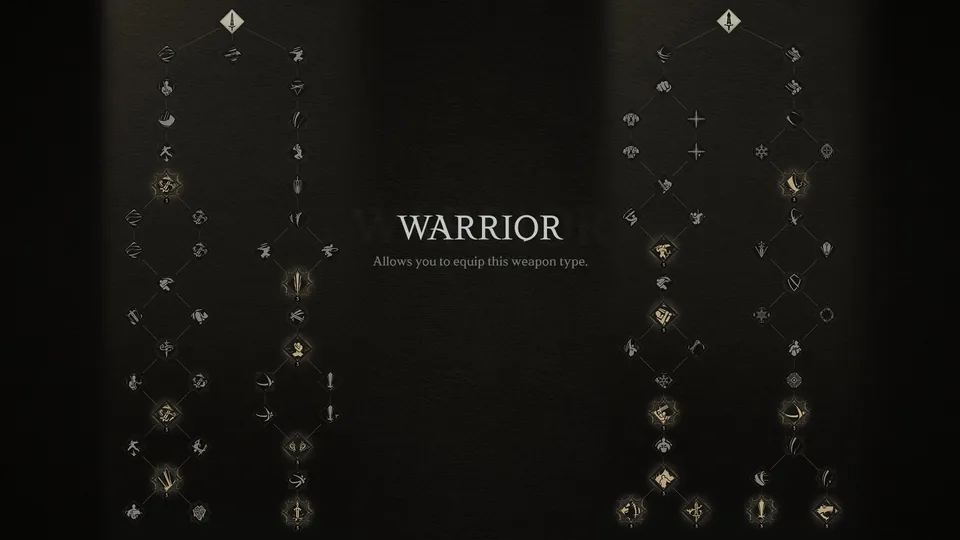
Traits are where you start deciding how your character actually fights.
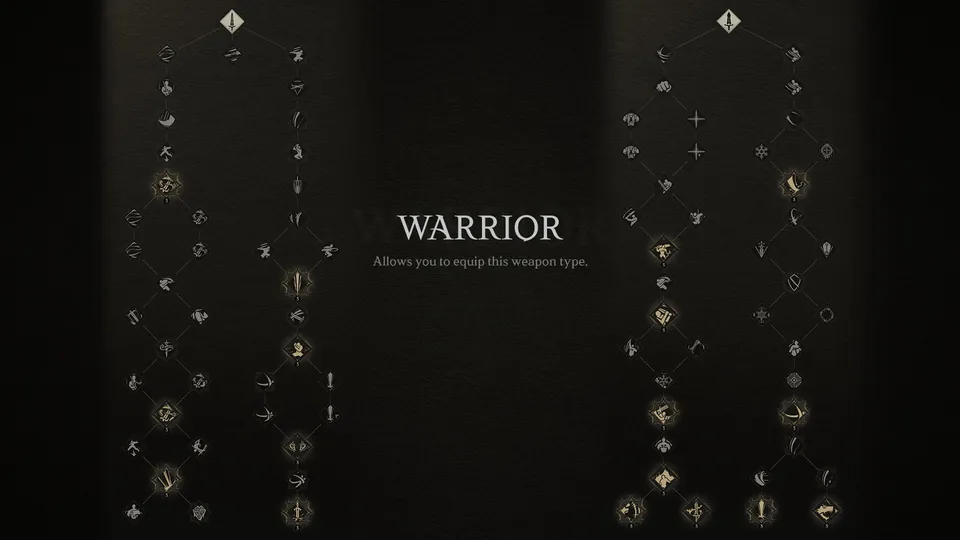
Every weapon type has its own trait tree, and you spend trait points in the Traits menu to work your way through it. For example, as a Fighter, your longsword tree and your greatsword tree are completely separate, each with its own paths and its own things to unlock. Most nodes are smaller stat boosts that carry you along a path. Others give that weapon brand new skills. And some change how an existing skill plays out, so the same skill can feel quite different depending on what you picked. Since the paths branch, two players using the same weapon can end up fighting in very different ways.
That's what lets you tailor your character to the way you like to play. Maybe you want to stay in close and trade hits, stay mobile and pick your moments, or pick up new skills and change how the ones you already have work until your kit fits the way you fight. The trees give you room to build toward that, so your character ends up feeling like yours.
So two players who both pick up the Greatsword can have completely different playstyles. The first goes down the damage branch, unlocking Armor Break and changing sunder into Sweeping Slash so it hits 2 times instead of once as well as providing a broader cleave arc. The second takes the defensive branch instead, picking up pummel strike which gives the player an attack that is usable while guarding that grants a shield to absorb damage. Both started with the same weapon but one player plays decidedly more aggressively while the other chose a much more defensive playstyle. Both builds are viable, but come down to players' playstyle.
Your build gets put to the test all over Auroria. Field bosses roam the open world, story quests end in fights that push back, and Hersander's Tower holds some of the toughest challenges each zone has to offer. Dungeons are one more of those tests. They're instanced just for you or your party of up to four, quest progress is shared inside, and you can take one on solo if you'd rather.
You'll get a chance to try one soon. The Next Fest demo opens up a brand new dungeon, Throne of Hinnon. Fair warning: it's a high-level dungeon, and with the progression available in the demo, it won't be an easy clear. That makes it a good place to find out whether your first build holds up, and a good reason to go back out and change it if it doesn't.
Exploring Is How You Grow
Your trait points come from Raeven's Coilstones, and every one of them sits near a powerful boss. Some of those bosses are out in the open, some are hidden away, and some only show up through certain quests. If you've found a Coilstone, there's a fight standing between you and it. We wanted exploration to pay off in combat, so a boss you finally beat rewards you with new skill or a new way to play.
Coilstones aren't the only reason to step off the road. Nui Tears are tucked all over the open world, and when you bring them to a Nui Statue, they raise your max HP. Every increase means a few more hits before you go down. The first few increases only take a handful of tears, and each one after that takes a few more, so it's something you build over the whole journey rather than max out in an afternoon.
Treasure chests range from sitting in plain sight to hidden behind the waterfall you almost didn't check. They can hold gear, rare crafting recipes, and other things that help you along. Chests and other objects you discover can be opened once per character, so you're never racing another player to get there first. Find it whenever you find it.
Not everything out there is friendly. Field bosses roam the open world, a clear step up from the monsters around them, with attack patterns that take some learning. They're worth the fight. Field bosses drop gear, including accessories, along with crafting materials you can't get anywhere else.
Hersander's Tower and the Hereafter Challenge
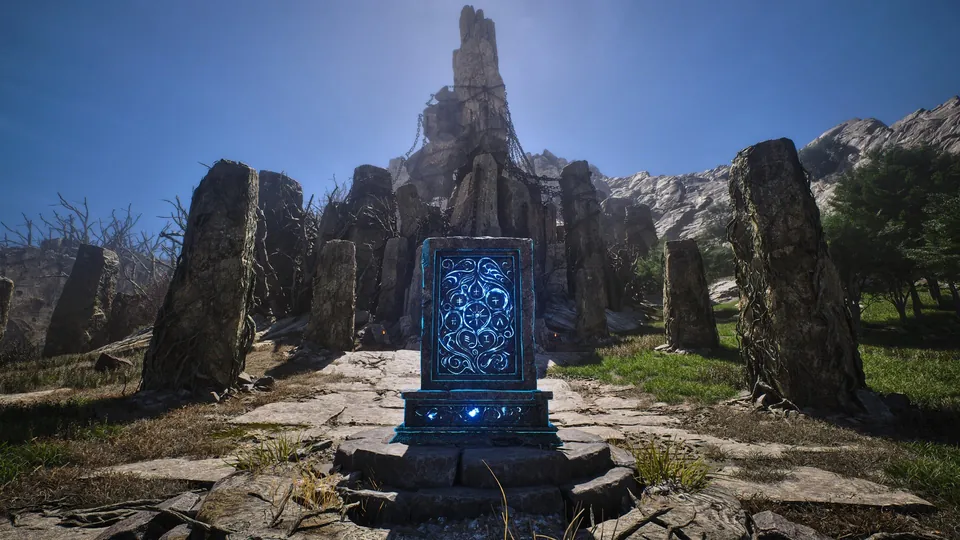
Every zone hides a set of Hersander's Tower. Hersander is the god of gambling, and he's a little particular about his offerings. Each tower gives you a riddle describing the item it wants. Sometimes the answer is just down the road. Sometimes it's somewhere you'd never look unless you were really paying attention.
Find and satisfy every tomb in a zone and, along with receiving a unique accessory, you unlock the Hereafter Challenge. Hersander then challenges you with a random souped-up version of one of that zone's bosses. The clock is also running. Your clear time goes on a leaderboard, so you're competing against other players to see who can take it down the fastest.
This is the culmination of everything you've been doing throughout the zone. Now it's time to put your skills to the test. It's the moment from the top of this post, with the difficulty turned all the way up.
The Road Ahead
We want playing and progressing in AAC to feel natural, and we think our current systems get us most of the way there. But there's always room for improvement. Things like how many points things cost, how the trees are laid out, and which skills get alternate versions will likely evolve based on player feedback. That's a big part of why we're doing Early Access.
As always, we'd love to hear what you think. What kind of build are you planning to try first?
If you haven't yet, wishlist ArcheAge Chronicles on Steam. The Steam Next Fest demo goes live October 20, with a new dungeon Throne of Hinnon and the PvP channels open from the start. You can also find us on Discord and X.
See you in Auroria,
Don
Global Project Manager, ArcheAge Chronicles
XLGAMES